 |
The village of Bijuesca
in pictures Photographs by Joop van der Flier (1997), Carmen Maza
(1998) and Frits van Krevelen (1998) |
 |
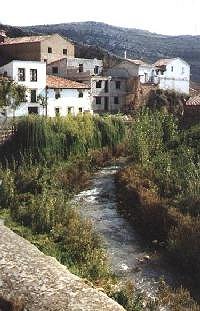 |
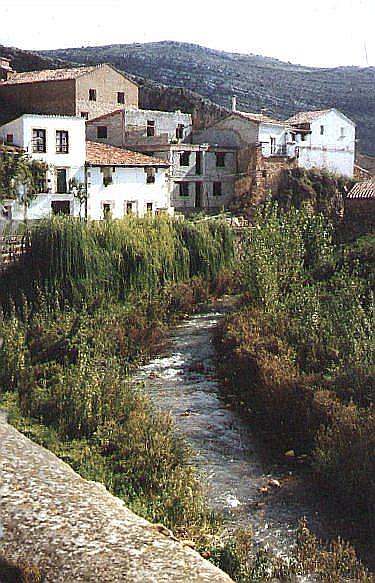
The riverside of Bijuesca |
Driving the A-1507 from Berdejo around the castle's hill we enter
the village of Bijuesca. The river Manubles is at our right, after the summer season the
water level is rather low. Trout fishing is popular over here.
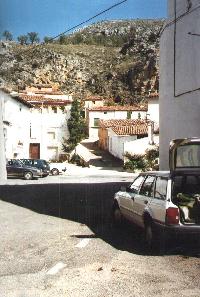 |
Joop has parked his car for a
walk to the castle |
After parking the car at the square it is time for a walk to the
castle of Bijuesca.
The population of the village is very small, decreasing from about
1.000 residents in the 19th century to 145 residents in 1995 (see The official Bijuesca homepage 1998 or
the new Bijuesca page).
Many houses were deserted in the last decades. This decrease of population in the small
villages is a problem appearing all over the province of Zaragoza and beyond. The Mayor of
the village, the Alcalde Ángel-Millán Marín Rubio, recently has initiated a program to
revitalize the village. By offering houses and properties at decent prices the village
tries to attract people from the economic more prosperous provincies in the north to
settle in Bijuesca, or to build a second home for the summer holidays. Our friends Carmen
and Toño (el artista) y Pili are among the new settlers. Toño's nice little castle is
allready in it's final stage, Carmen is starting to build her holiday cottage at this
moment. Cristina prefers to settle in beautiful Menorca some day in future.
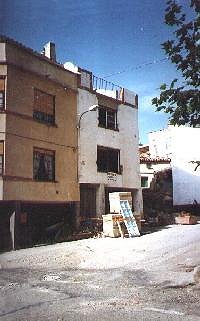 |
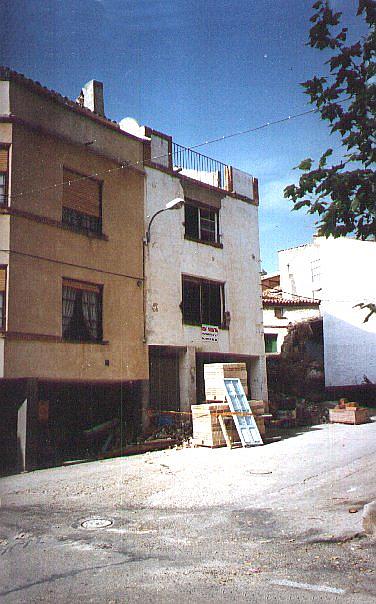
Renovation of a house (1997) |
All over the village houses are rebuilt or repaired. This house was
already finished and painted when we arrived this august (1998)
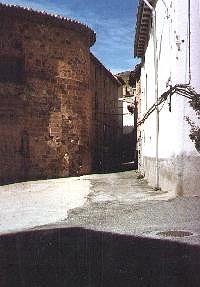 |
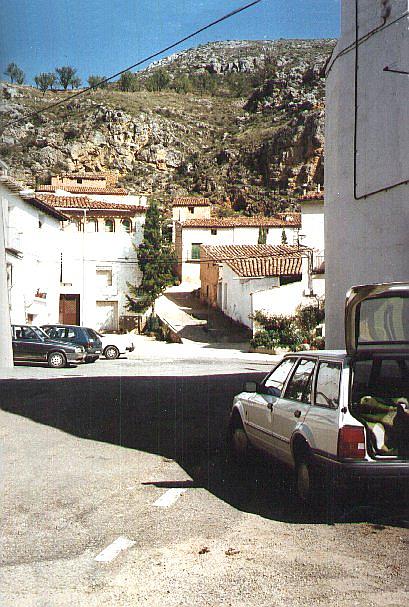
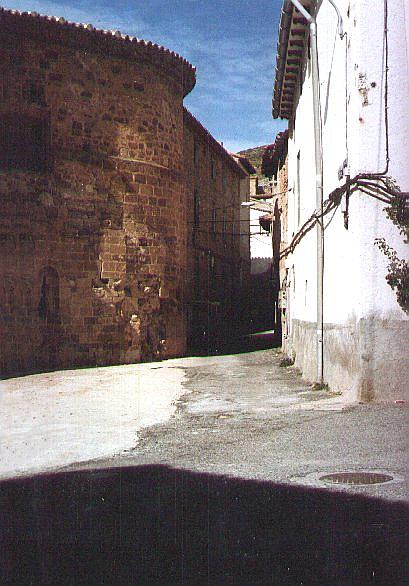
The apsis of the old church downtown at the
river |
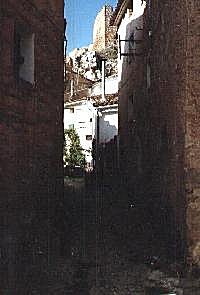
The narrow alley behind the old church near the river. We had to
pass here with our car when the main street was blocked during the fiesta (San
Roque). It seems impossible for a large car, but we managed with only a few inches
margin.
 |
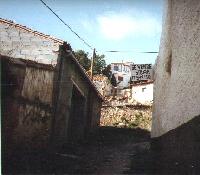
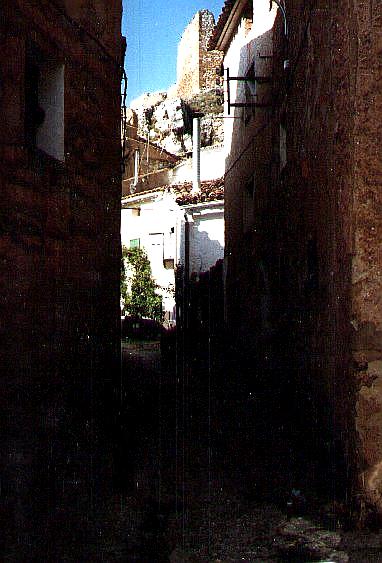
The tall Moorish castle of Bijuesca shows
up in the Calle del Virgen II |
 |
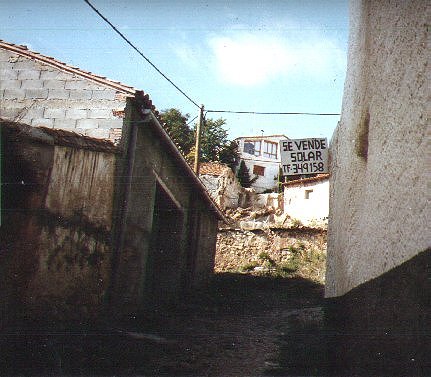
The Calle del Virgen I with Manolo's house
uphill |
Climbing somewhat
further the tall Moorish castle of Bijuesca shows up in front between the houses. This is
an impressive view of the strategic location. How many stones must have been carried the
way uphill to build such a vaste fortress ? And who did the work, probably the christians
slaves of the 8th century. During our visit next August it is interresting to gather more
information on the history of the Islamic fortresses in the region. I assume the emir
Ayyub of Calatayud had ordered to build most of these castles.
After some climbing
the Calle Mayor uphills at the left we discover the Calle del Virgen II. Behind the house
at the right a property is for sale, as the signboard shows.We look straight at the house
of our friend Manolo (El
Medico) Poncela, it is really close to the castle.
|
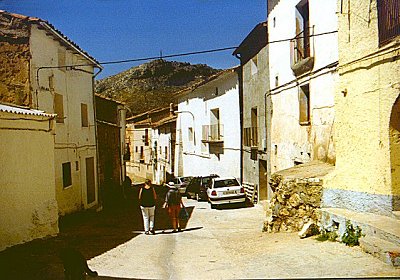
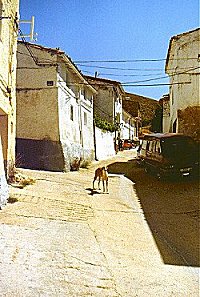
The calle Mayor, Ans and Carmen walking |
|
The Calle Mayor |
A look back downward
the calle Mayor. Yes, this picture was taken a few days later on our visit. Carmen and Ans
are walking to the centre of the village. But back again on our walk to the casle. After
some climbing the Calle Mayor uphills at the left we discover the Calle del Virgen III.
This was *really* a narrow street for our Ford car, but we managed. .
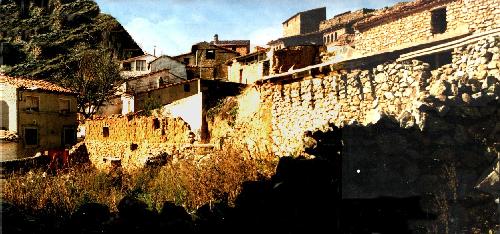 |
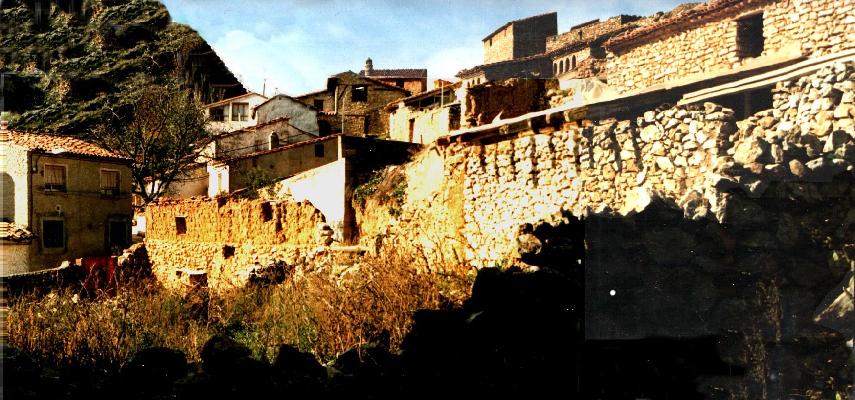
A look at Manolo's house at the castle hill |
An
other view on Malolo's
house at the castle hill, one of the most beatiful locations of the village. Gradually
all houses are rebuilt since the time Manolo moved to Bijuesca in the early eighties You
may find Toño's nice house in the middle designed in regional style with the typical
arcade windows During our visit to Bijuesca we stayed the nights at Manolo's Coral del
Pedro, a fine annex of his near his house, next to Toño's at the left..In between the
chimney of the 'El Albergue de Bijuesca' is just visible.
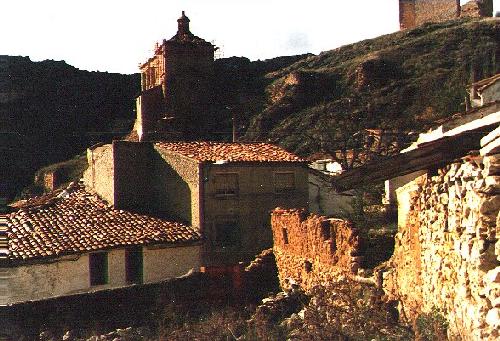 |
The same property with a look on the
parochial church and the castle at the upper right corner |
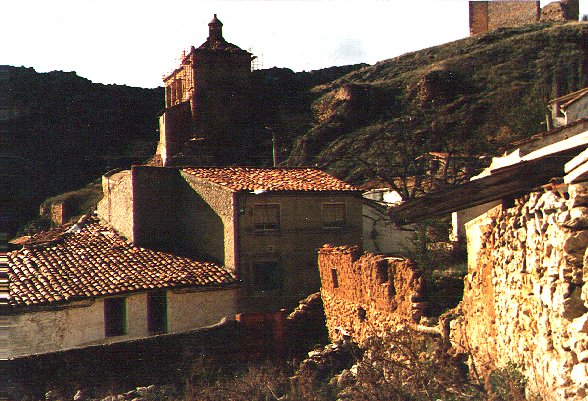
This is really a beautiful location with a view on the parochial
church and the castle in the hill. Here the church is still in restauration, at the moment
it is finished. The church is built upon the remainings of the fortified entrance-gate of
the castillo. The stones were taken from the former walls surrounding the castle hundreds
of years ago.
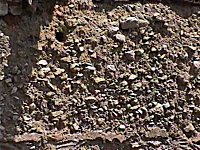 |
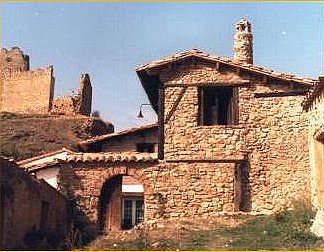
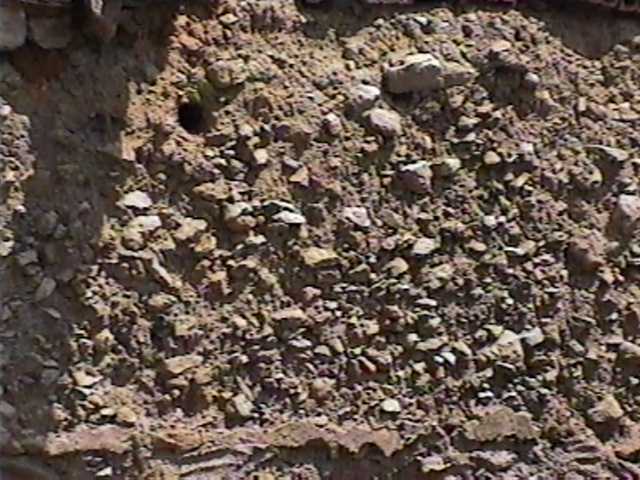
a mixture clay and stones |
The
walls of the houses were usually made of a mixture clay and stones much like adobe. So if
the roof of the building is destroyed the walls disintegrate easily by the rain.
 |
The Youth Hotel , 'El
Albergue de Bijuesca' |
At the right the youth hotel of Bijuesca, close
to Manolo's house and an other example of the organizational talents of Manolo and his
wife Olga. It has 5 sleeping rooms and a capacity of 50 guests. This hotel is member of
the
Red Aragonesa de Albergues Juveniles and therefore of the
Youth Hostelling International organization.
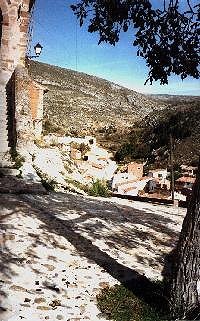 |
The parochial church uphills is reached
|
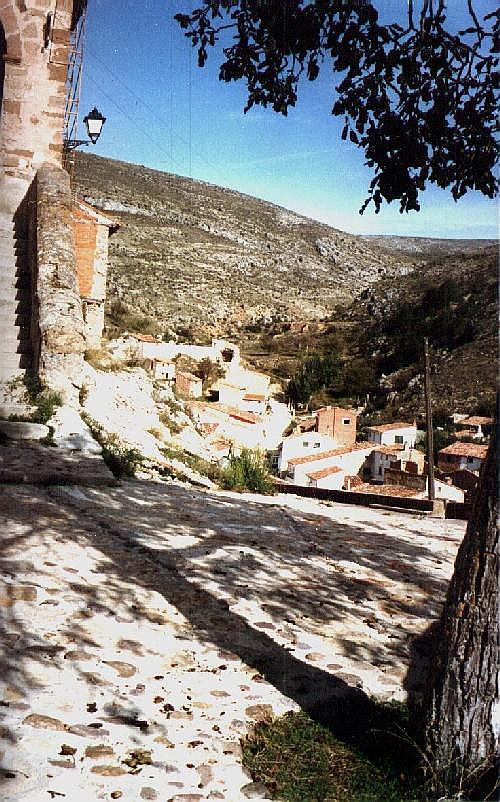
This is not yet the top of the hill at the castle, but the look back
to Bijuesca is beautiful. Actually this same picture is used in the next panorama. The
altitude of Bijuesca is 900 m (2300 feet) above sealevel, so it is not so very hot over
here as it is in most parts of Spain. At the south side of the Mont Caya moutains the cold
winds fom the north and the rain is hold back, so even in winter the temperatures fall
seldomly below zero degrees centigrade. As we were told the climate is very nice,
especially for Carmen of Behobia, were rain and mist is a rather regular experience, and
hot summers are with high humidity levels
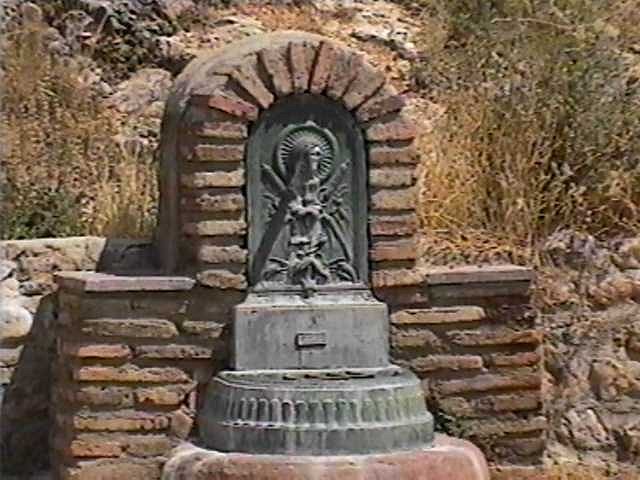
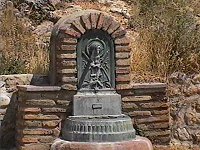 The
fuente near the church
The
fuente near the church
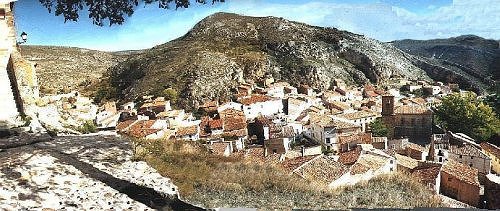 |
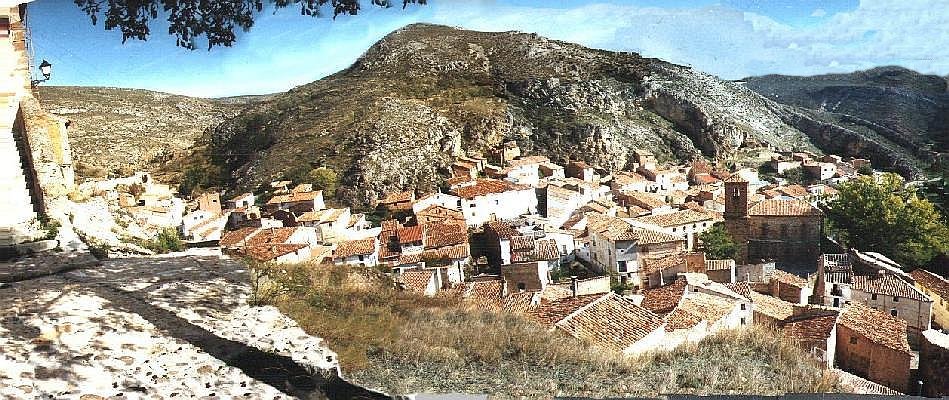
A panorama of Bijuesca from the square in
front of the church |
Tthis is the view from the square in front of the Joop made several
fotos, but I glued them together on the computer. So even Joop didn't see this picture
before. It is more than 90 degrees. At the right the hills in the west, from where the
next picture was taken.
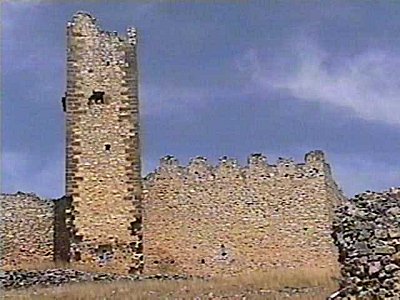 |
The castillo at a closer look |
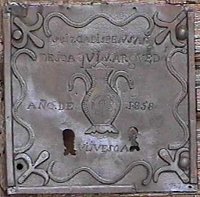 |
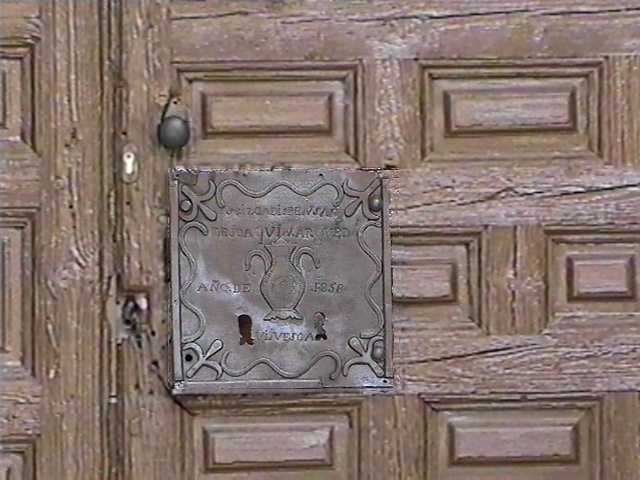
The Lock on the churchdoor of 1858 |
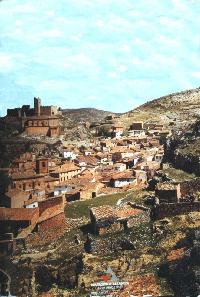 |
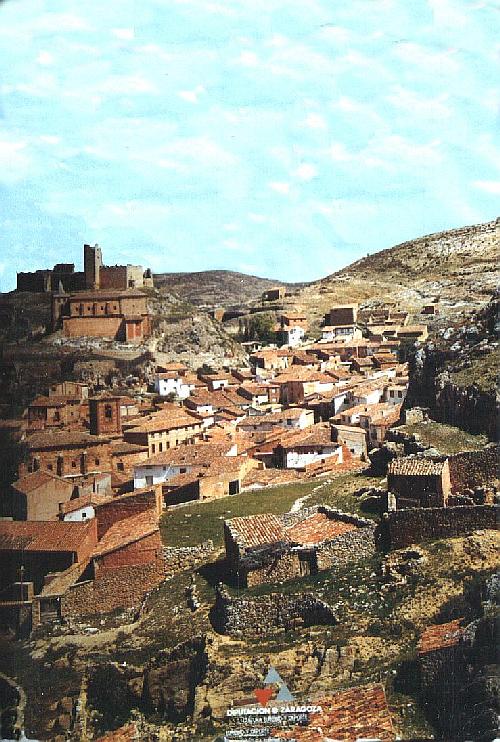
A view at Bijuesca from the hills at the
west |
At the left the official poster, the province of Zaragoza has
printed to promote the village of Bijuesca. It shows clearly how large the village is
inrespect to its small population.
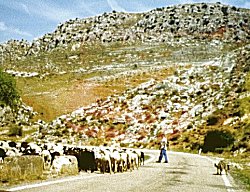 |
The passing of a flock |
Bijuesca
is situated near one of the Cañadas Reales, the royal pathways for the migration of
flocks of sheep from the south to the north vice versa covering all of Spain by numerous
tracks. Alfonso X, called 'El Sabado', The Wise (1221-1284),
King of León and Castilla, (1252-1282), son of Ferdinando III, whom he succeeded, ordered per decree the
establishment of free pathways - carreteras - for the flocks to pass. These free pathways
still exsist today, even through the middle of Madrid.At the right a small flock is
passing the road near Bijuesca.
Dear guests, I am
afraid this is all for now. These pages are a compilation of our visit to Bijuesca on our
tour to Spain in 1998. I hope you enjoyed the pictures and perhaps you too will visit this
real charming village in the centre of Spain. To our friends Manolo, Thomás, Carmen,
Cristina and to all those sincere inhabitants of Bijuesca, we thank you very much indeed
for your hospitality and your warm friendship. ¡¡Hasta la vista!!
Haarlem, february, 1999
Back to the top
 The
fuente near the church
The
fuente near the church