 |
Calatayud and Bilbilis Most photographs by Frits van Krevelen (1998) |
|
| |
Calatayud and Bilbilis Most photographs by Frits van Krevelen (1998) |
|
Calatayud
| |
Calatayud |
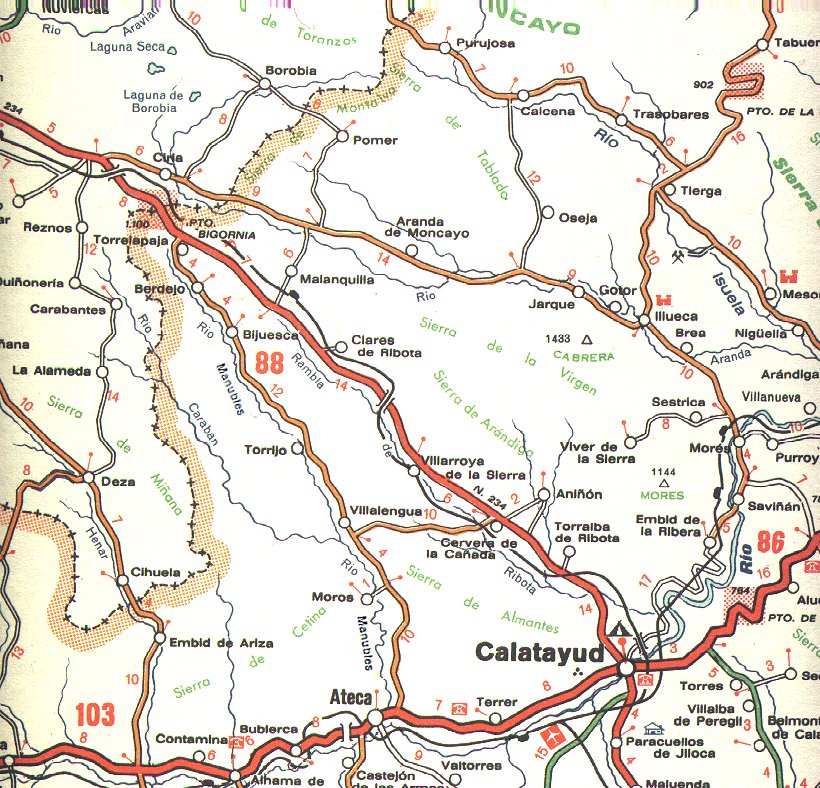
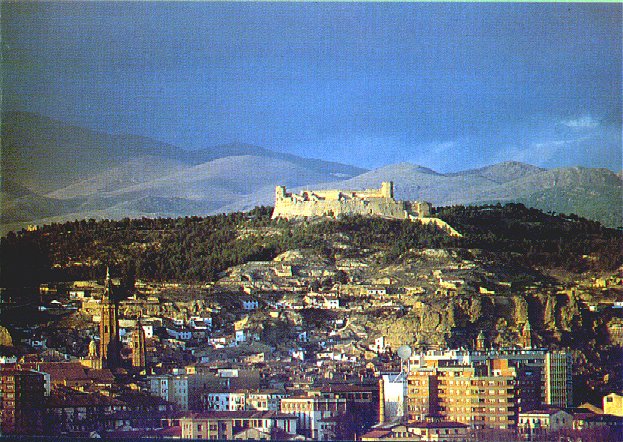
Bijuesca is located in the district Calatayud (district 21). Calatayud is the capital of the area of the same name. It is a rather small town and serves as cultural centre for the district, situated 83 km west of Zaragoza. The city is dominated by the 8th century Moorish castle 'Castillo de Ayyub' (716 AD) and the octogonal minaret of the Colegiata de Santa María church in mudéjar style. It was the Moorish emir Ayyub who gave its name to Calatayud (qal'atAyyub, the castle of Ayyub). Calatayud replaced the Roman city Augusta Bilbilis at the east of the city, built by the Roman emperor Augustus. Population (1995) 17,256.
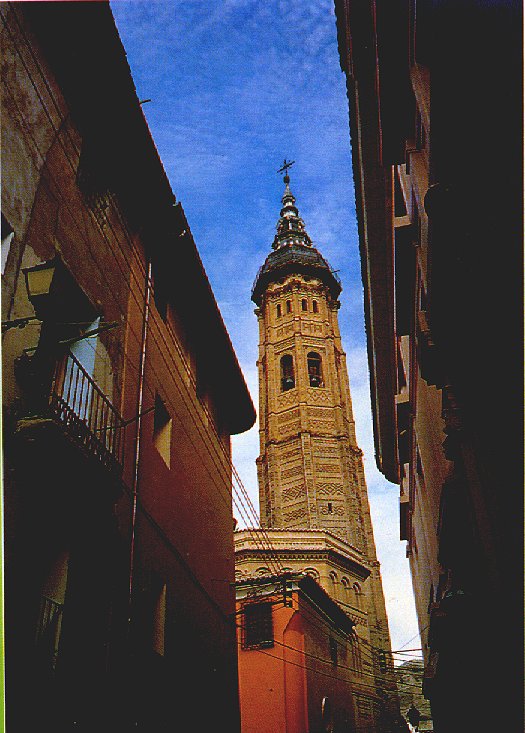 |
Iglesia de Santa María |
Its
outstanding Mudejar monuments are very interesting. Specially remarkable are the Parish
churches of Santa María (15th century) and
San Andrés (15th century). Both of them have been declared National Monuments and their
slender towers rival each other in beauty. The first one can be visited,. the second one
is being restored at the moment (1998) and can only be enjoyed from the outside. We should
not overlook the church of San Pedro de los Francos (15th century) with its Mudejar eaves.
This church, another National Monument, is also being restored at the moment and the
inside could not be visited. The tour can be completed visiting the church of San Juan el
Real. An exceptional three-seat ceremonial chair is kept in its chancel. Many traces of a
magnificent Mudejar past can be noticed in the town planning as well as in the civil
architecture.
.
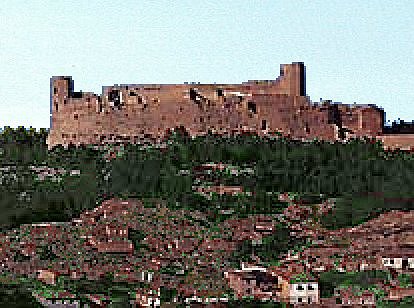 |
The Moorish castle 'Castillo de Ayyub' |
T he castle of Ayyub, also called by the Bilbilitanos 'Plaza de Armas', has a stern design and is built on the oval top of a marl hill. At the north at a lower level it is flanked by a typical Morish factory, which accentuates the height of the castillo. It was built in 716 AD by emir Ayyub and enlarged by emir Muhammad I when he charged the fortification of the city. The oldest parts are the octogonal towers, the passway and a rectangular building. Much is altered in the following centuries, e.g. Philips V had the factory dismantled.
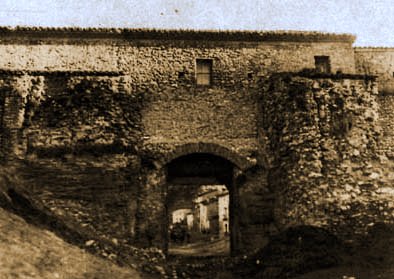 |
The Gate of Soria (puerto de Soria) |
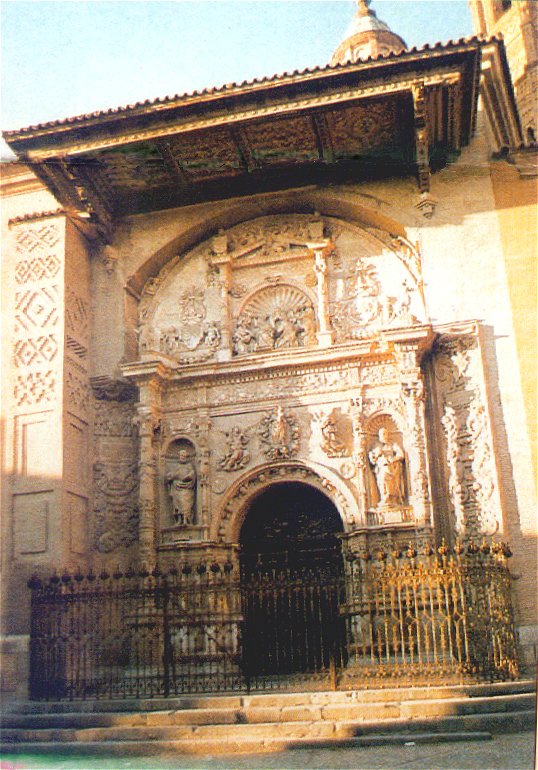 |
Colegiata de Santa María la Mayor |
The plateresque
facade of the collegiate church of Santa Maria is a fine example of the Spanih Renaissance
art. Since the conquest of Calatayud in 1120 AD it has been the most important church. The
original Mudejar church of 1239 was replaced in the 17th century by the actual
pre-baroque, manieristic church.
Bilbilis
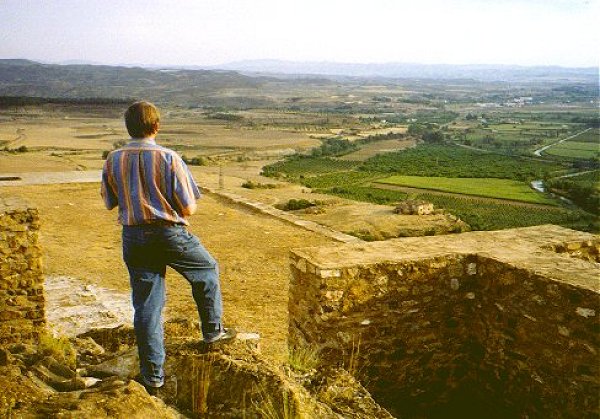 |
Looking east over the Rio Jalón valley at Bilbilis |
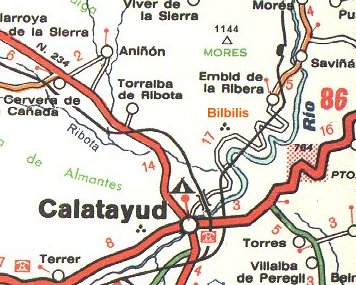
Leaving Calatayud to the east along the river Jalón at the left we visited the Roman city of Bilbilis. With the foundation of CesarAugusta (Zaragoza) in 24 BC the Romans succeeded in conquering of Spain, starting at 218 BC. August ordered after 44 AD. the conversion of Colonia Victrix Iulia Lepida (Velilla de Ebro), Urbs Victrix Osca (Huesca), Augusta Bilbilis (Calatayud) and Turiaso (Tarazona), all former celtic cities . Augusta Bilbilis, as it was named after the emperor, was famous for its mild climate and its beautiful location. It was the home town of the poet Marcialis. After the collapse of the Roman empire, the city declined and ended up in ruins. Just a few decades ago some parts were excavated and the forum was restored.
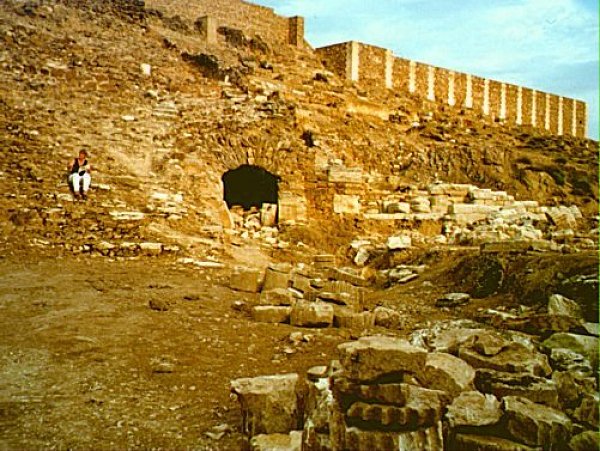 |
The Roman Forum at Bilbilis with in front the theater |
The Forum is just next to the large theatre, where thousands of people could wath the plays. Not very much is left from this inmense building
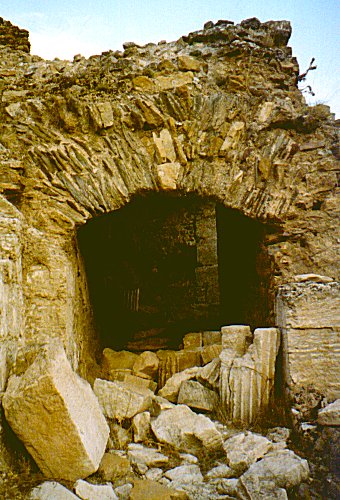 |
A tunnel of the Roman theater at Bilbilis |
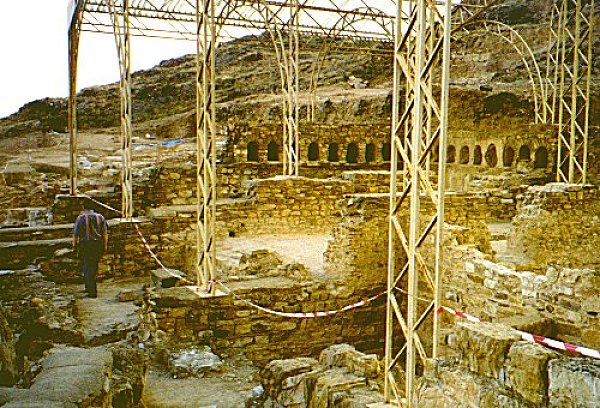 |
The Thermes, the hot-water bath |
The Romans liked bathing and in every city the thermes take a prominent part of the city. The Roman baths consisted in: the natatio, the hypocaust and the laconicum
The city was covered with the white marble from Carera, Italy, as most cities in the Roman empire. The logistics of carrying so much mable from Italy to this (and other) locations is astonishing. Over the centuries most of the marble is decayed and washed away by the rain.
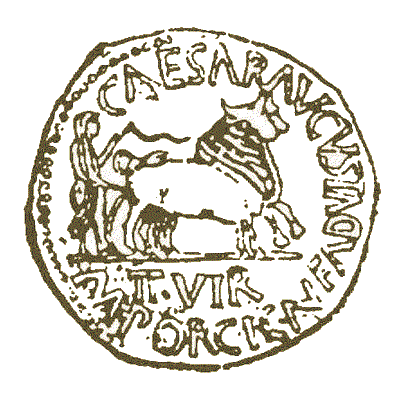 |
The golden Augustus |
Back to the top of this page