 |
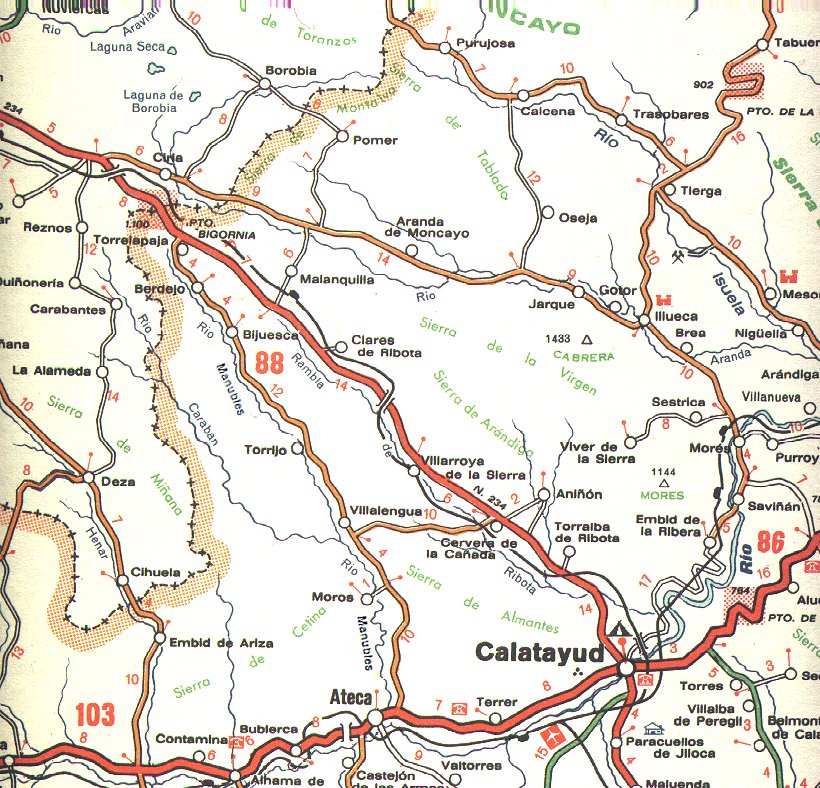
Where in the world is Bijuesca ? Photographs by Frits van Krevelen (1998) |
|
| |
Where in the world is Bijuesca ? Photographs by Frits van Krevelen (1998) |
|
|
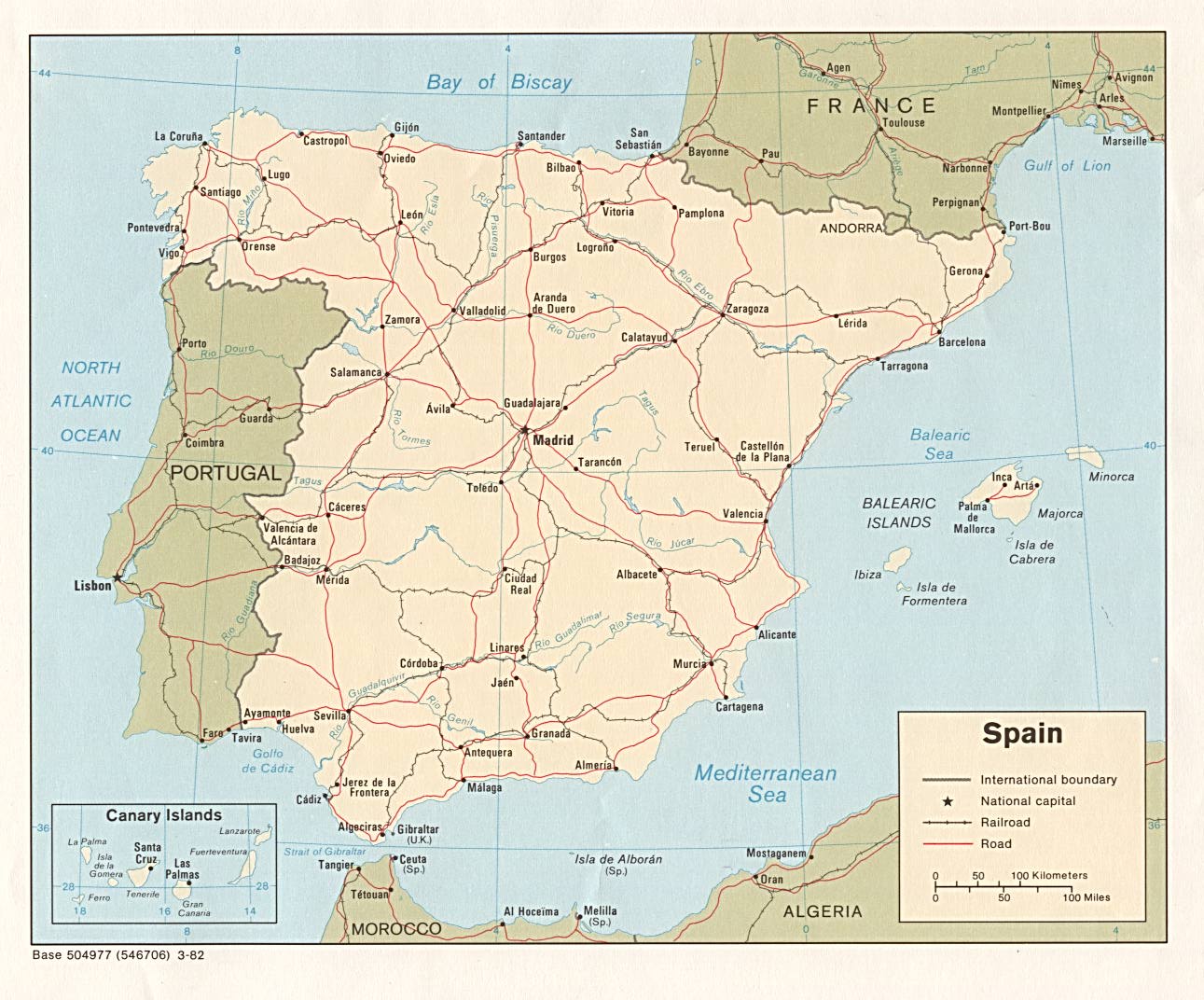 |
| Bijuesca is located in the province of Zaragoza, Spain |
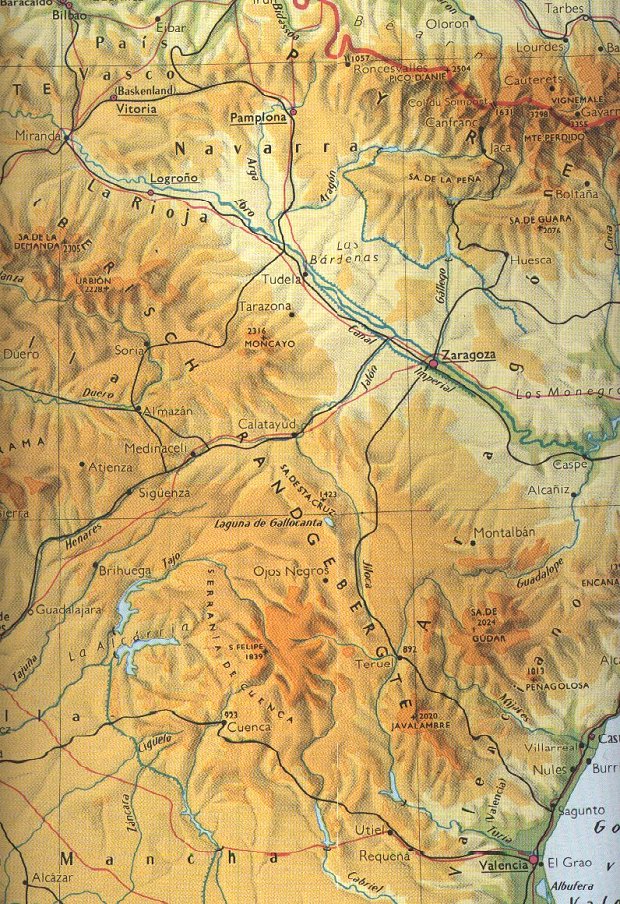 |
| Aragón and its provincies Huesca, Zaragoza and Teruel |
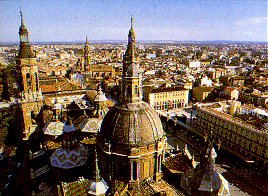 |
17th-century El Pilar Cathedral |
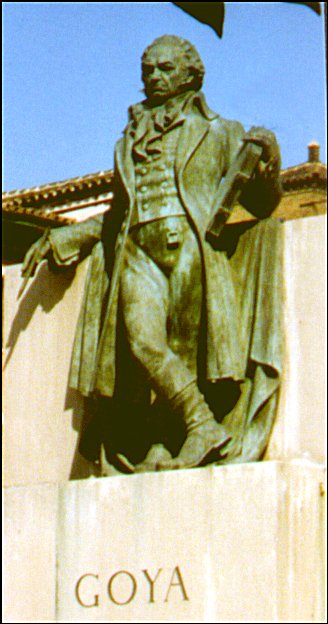 |
Statue of Goya |
The ancient
settlement Salduba originally occupied the site of present-day Zaragoza. Salduba was
captured between the years 19 to 15 B.C. by the Romans, who renamed it Caesaraugusta, in
honour of its founder, the Emperor Caesar Augustus; the present name is a corruption of
the Roman name. The layout of the former Roman town has been little changed in the old
part of the city, between the rivers Coso and Ebro. In addition, the remains of the Roman
walls, sewage system, theatre, paving and magnificent mosaics are still preserved and show
us the great importance this colony once had. After the 6th century AD, the city was ruled
successively by the Suevi, the Visigoths, and the Moors. From the 12th century to the
latter half of the 15th century, it was the capital of Aragón. Zaragoza declined in
importance after the unification of the kingdoms of Aragón and Castile in 1469. The city
became renowned throughout Europe, however, during the Peninsular War (1808-1814), when
its citizens displayed extreme heroism against a besieging French army in 1808 to 1809.
Population (1991) 837,327.
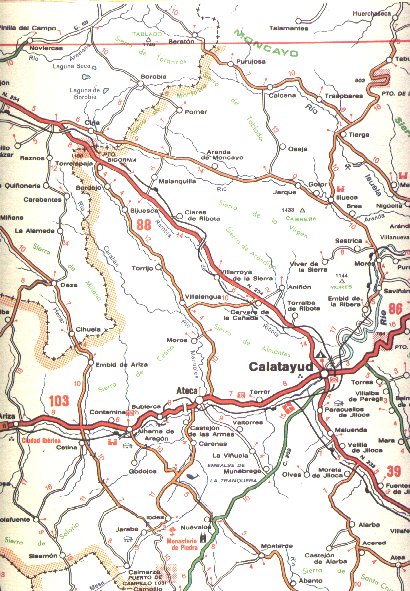 |
The province of Zaragoza, part of Aragón. The district of Catalayud is marked red |